
Three Forces Shaping the Future of Moulded Pulp Packaging
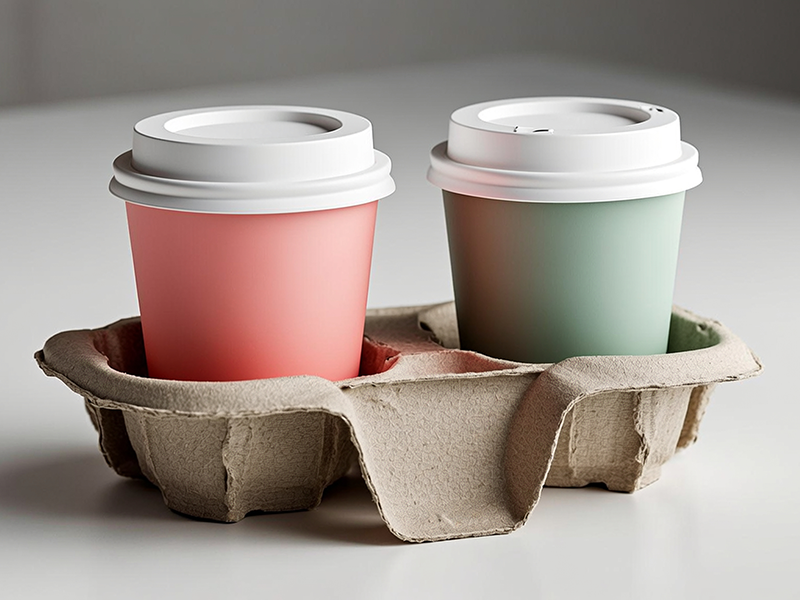
Regulation, socioeconomic trends, and material innovation are converging to accelerate moulded pulp's displacement of single-use plastics across global markets.
1: Regulatory mandates and corporate sustainability commitments
Regulatory frameworks are increasingly mandating the transition away from single-use plastics, providing a durable and predictable growth driver for moulded pulp. In Europe, the first phase of the EU’s Packaging and Packaging Waste Regulation (PPWR) is due for full implementation in August 2026. Meanwhile, Extended Producer Responsibility (EPR) legislation continues its gradual but steady expansion across US states. In Asia, China is tightening its sustainable packaging requirements in 2025 – including financial penalties for non-recyclable or non-compostable single-use plastics – while ASEAN nations are working toward greater harmonisation of both EPR and food-safety standards. Moulded pulp is well placed to benefit from all of these shifts, particularly in takeaway and disposable food-contact applications.“In parallel with EPR, consumers are increasingly demanding brand-owner accountability for sustainability targets, even as timelines are sometimes pushed out.”
Philippa Davies, author of The Future of Moulded Pulp Packaging to 2030
Beyond legislation, voluntary commitments are reinforcing the regulatory push. Packaging manufacturers, pulp and paper producers, and brand owners are collaborating with NGOs and government bodies through trade associations to drive sustainable development and ensure compliance. Together, regulation and voluntary accountability are expected to sustain strong momentum in moulded pulp adoption worldwide.
2: Urbanisation and shifting consumer habits open new markets
Despite a challenging macroeconomic backdrop, underlying demographic and behavioural shifts are creating structural demand for moulded fibre solutions. Rapid urbanisation, particularly across Asia and Africa, is reshaping purchasing patterns. Smaller households are driving higher demand for individually portioned ready meals, compact produce packaging, and takeaway consumption, all of which are natural applications for moulded fibre formats.“A challenging macroeconomic environment has dampened investment in moulded pulp (as across many packaging segments), yet category prospects are expected to outperform GDP, supported by regulatory and voluntary initiatives accelerating substitution from plastic to paper, particularly EPS-to-moulded-pulp conversion in takeaway food.”
Philippa Davies
The continued expansion of e-commerce is increasing demand for custom-engineered moulded fibre protective packaging, especially for high-value electronics and automotive components. Cost remains a tangible constraint: moulded pulp can carry a price premium of up to 25% over incumbent plastic formats, which heightens sensitivity among both consumers and brand owners. Tariff uncertainty adds further complexity in the near term.
Nevertheless, the longer-term combination of urbanisation, smaller household sizes, and sustained legislative commitment to sustainability is expected to underpin continued growth and commercialisation in moulded pulp applications.
3: Innovation in coatings and process technologies
Technical innovation is enabling moulded pulp to compete with plastics in applications that were previously out of reach. A central focus is the shift away from PFAS-based barrier coatings, now restricted or banned in many markets, towards water-based and bio-based alternatives that are compostable, recyclable, or both. Natural additives are also being deployed to enhance tensile strength for demanding applications such as disposable cutlery. While water-based coatings remain technically challenging for deep three-dimensional objects, significant progress has been made, along with developments in removable, recyclable liner-based solutions.Both wet and dry moulding processes have recently yielded commercially viable products with strong sustainability credentials. Advances in dry moulded fibre are particularly notable: faster throughput, lower processing costs, and improved surface finish are extending the range of applications available to moulded pulp manufacturers. Moulded fibre bottles are currently under development, although most remain at the trial stage rather than full commercial launch.
“Dry moulded fibre and high-speed thermoforming technologies yield faster production, reduced energy consumption, and higher finish quality, allowing moulded pulp to compete directly with plastic in precision applications such as cup lids and small-format trays.”
Philippa Davies
Emerging cellulosic feedstocks offer a renewable, cost-effective alternative to traditional softwood fibres. For moulded pulp producers, hemp and eucalyptus are among the most promising options. Regional growing conditions determine which fast-growing, long-fibre plants are viable; many are publicly certified under PEFC, providing verifiable sustainability credentials.
Outlook to 2030
Despite near-term economic headwinds, the moulded pulp market is well positioned for consistent, long-term growth. While uncertainty may slow investment decisions in the short term, the structural drivers underpinning sustainable packaging make it a compelling proposition for investors with a long-term outlook.
Smithers, the global authority on packaging market intelligence, brings over 80 years of technical and scientific expertise to deliver the critical data and independent analysis that industry leaders rely on to make informed strategic decisions. This article is based on its latest research into the moulded pulp packaging market.