Why PCR packaging matters now
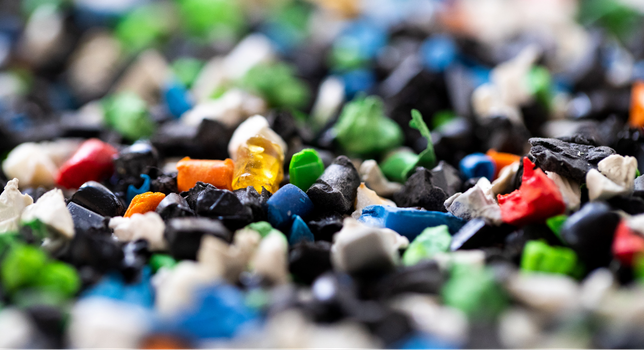
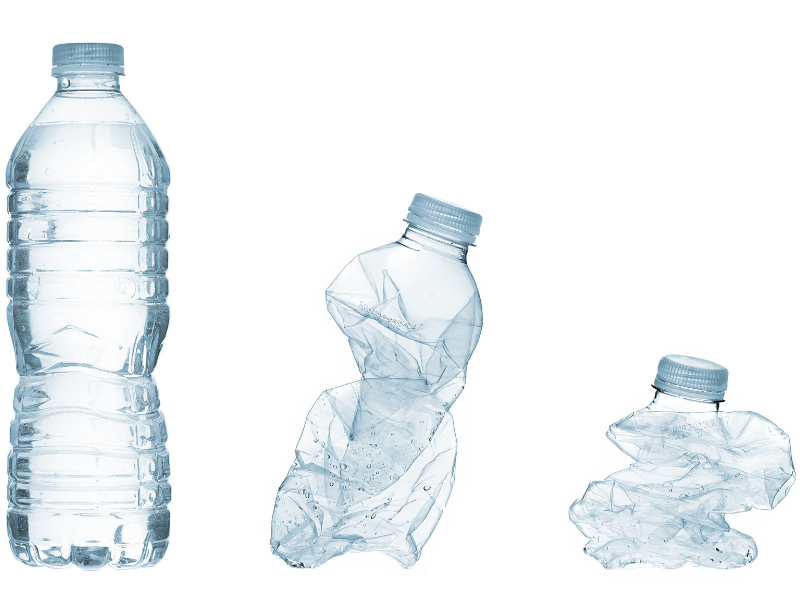
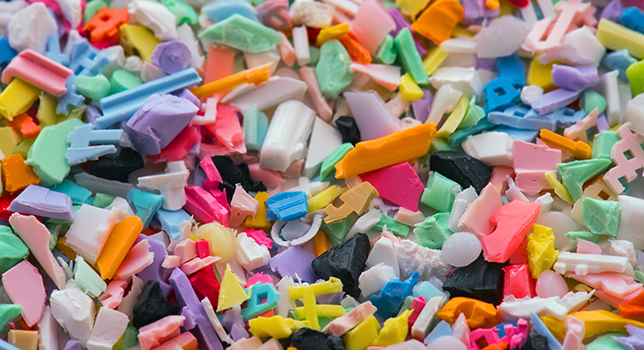
Post-Consumer Recycled (PCR) plastics are materials that have been collected after consumer use, sorted, processed and reintroduced as a raw material for new packaging. Using PCR reduces the need to manufacture virgin polymer, cuts reliance on petrochemical feedstocks and diverts plastic from landfill and incineration. According to OECD data, global plastic waste more than doubled between 2000 and 2019, yet only 9% of that waste was actually recycled. PCR packaging is one of the most scalable responses the industry has to that problem.
However, market growth has underperformed earlier forecasts in the near term: year-on-year growth slowed to an estimated 3.4% in 2025 and 2.9% in 2026, driven by poor economics for recyclates that triggered closures of recycling plants and materials recovery facilities (MRFs) across Europe and the US between 2023 and 2026. A return to stronger growth is expected from 2028 onwards, as legislation such as the PPWR comes into full enforcement and eco-modulation of EPR fees begins to reward producers that have successfully incorporated PCR into their packaging.
The economics of the transition
The central tension in the PCR market is a pricing one. Recycled polymer currently costs more to produce than its virgin equivalent, partly because collection and processing infrastructure has not kept pace with demand, and partly because low collection rates limit the availability of clean feedstock. When recyclate is scarce, prices stay high. When prices are high, brand owners look for ways to minimise their PCR exposure rather than increase it. That dynamic has contributed to many brands missing their self-imposed 2025 PCR targets.
The cost gap is not fixed. It responds to investment in processing technology, to the scale of Deposit Return Systems that improve the quality of collected material, and to policy instruments such as eco-modulation that reward sustainable packaging choices across multiple criteria simultaneously. Closed-loop systems, where packaging is collected, recycled and remanufactured within a defined local area or supply chain, are showing early evidence that traceability and cost efficiency can be achieved together.
The role of technology
Advances in sorting and processing are steadily improving what is possible at the mechanical recycling stage. Robotics deployed in materials recovery facilities can significantly increase the yield of clean rPET from mixed streams while reducing contamination rates, making more of the collected material usable for food-contact and other demanding applications. Artificial intelligence is being applied to identification and sorting tasks that were previously too complex or too slow to perform at commercial scale.
For plastics that cannot currently be mechanically recycled at sufficient quality or volume, chemical recycling offers a complementary pathway. The technology converts mixed or contaminated plastic waste into a feedstock that can be used to produce new polymer with properties equivalent to virgin material. A February 2026 decision by the European Commission to recognise chemically recycled content within its PCR accounting rules for PET bottles removes a significant regulatory barrier to investment in this area; however, the three-year lead time required to build a chemical recycling plant means meaningful additional supply is unlikely before the end of the decade.
What the regional picture tells us
Europe accounts for the largest share of global PCR packaging consumption and is growing faster than any other region, underpinned by the regulatory framework that gives brand owners and packaging manufacturers clear long-term signals on required PCR content. North America has active EPR legislation in seven states but lacks consistency, and a shift in the policy environment at federal level is creating additional uncertainty. Asia presents the most varied picture, with some of the world's most ambitious PCR targets sitting alongside significant gaps in collection and processing infrastructure.
What this means for businesses in the sector
For packaging manufacturers, brand owners and retailers, the direction of travel is clear even if the pace is uneven. PCR content requirements will increase, reporting obligations will multiply, and the cost of non-compliance will rise in most major markets. Businesses that have already invested in understanding their supply chains, securing access to quality recyclate and engaging with EPR schemes are better positioned than those waiting for the regulatory picture to stabilise fully before acting.
For investors and technology providers, the gap between current PCR supply and legislated demand represents a structural commercial opportunity. The recycling infrastructure deficit is real and will require sustained capital allocation to address. Mechanical recycling, chemical recycling, digital tracking and verification, and closed-loop logistics all represent areas where private investment can accelerate the transition while generating returns.
The PCR packaging market is moving fast, and the data behind strategic decisions needs to move with it. Smithers continuously monitors real-world market conditions through its global expert network, updating estimates and forecasts as new evidence emerges.
The Smithers report
The Future of PCR Packaging to 2031 provides detailed forecasts, regulatory analysis and technology assessments for those looking to understand the full scope of the market. To access the full findings, download a brochure or speak to a Smithers expert about how our data can be tailored to your specific business needs.