Industry expert Arthur Mayer is the author of
The Future of Global Tires to 2030, a market report published by Smithers. With many years of experience in the tire industry, Arthur has worked across a variety of roles at Dealer Tire and as a contract writer and consultant covering a broad range of tire topics for Smithers and its clients. He has also been a regular speaker at Smithers’ Traction conferences, where he focused on the fast-emerging area of sensors and intelligent tires. We sat down with Arthur to discuss the key findings from his latest report.
Q: Arthur, give us the big picture. Where does the tire market stand right now?
Arthur Mayer: It’s a market under pressure but still fundamentally healthy. Global value was $282 billion in 2025, heading toward $367 billion by 2030. In unit terms, we’re looking at around 2.6 billion tires this year growing to over 3.1 billion. So the trajectory is upward, but the path has been disrupted. Trade turmoil, tariff uncertainty, cautious consumers deferring purchases – these are the real headwinds right now.
Q: How significant is the tariff situation?
Arthur Mayer: It’s significant enough that we’ve revised our 2025 demand forecast down about 4% compared to what we were saying in late 2023. Tires are a deeply globalized industry, and when trade flows get disrupted, the whole chain feels it – tire makers, automotive manufacturers, raw material suppliers. That said, I don’t think the fundamentals are broken. The market will adapt to whatever trade regime ultimately prevails, assuming geopolitical stability holds.
Q: Are consumers changing their buying behaviour?
Arthur Mayer: Yes, quite noticeably. Some consumers are deferring tire purchases, and those who do buy are often trading down to cheaper options. Notably the premium segment is holding up surprisingly well. It’s that squeezed middle that’s really feeling the pinch.
Q: What’s happening with electric vehicles, given how central they are to the tire story?
Arthur Mayer: It’s a nuanced picture. The push for EVs has weakened in the United States, where the current political environment has given internal combustion engines something of a reprieve. But globally, China and Europe are pressing ahead. And affordable Chinese EVs are emerging as a potentially transformative force worldwide. For the tire industry, EVs matter because they demand different tire characteristics – notably noise reduction, where foam is increasingly being used, and of course the weight and torque profile of electric drivetrains changes tire wear patterns considerably.
Q: Where are the fastest-growing opportunities for tire makers?
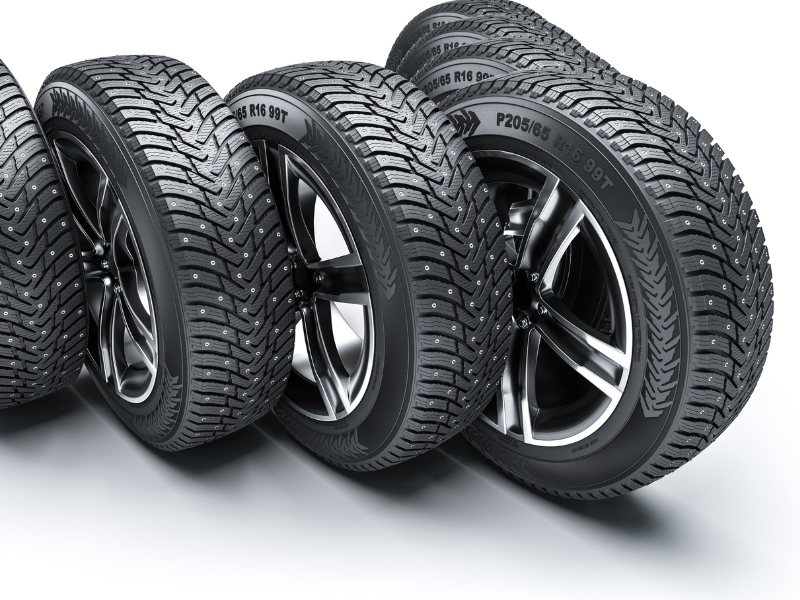
Arthur Mayer: Passenger tires for specific uses are the standout story – high-performance passenger tires, EV-specific tires, low rolling resistance tires, run-flats, winter tires. The growth of SUVs, CUVs and pick-up trucks globally is a major driver. Premium motorcycle tires are actually the fastest-growing specialty segment, which surprises some people, but there’s strong momentum in Asia-Pacific toward premium bikes. Mining, construction, and aviation tires are also worth watching in value terms.
Q: Speaking of Asia-Pacific, how dominant is that region?
Arthur Mayer: It contains half of global unit volume, over 40% of value, and it’s where the innovation and manufacturing muscle increasingly resides. China is the biggest market by size, India is the most exciting growth story. We’re forecasting 4.7% annual unit growth for the region to 2030. And it’s not just demand – Asia-Pacific is central to raw material supply, natural rubber obviously, but also the advanced chips that go into modern vehicles.
Q: What about sustainability? Is that still a priority amid all the economic turbulence?
Arthur Mayer: Absolutely, and I’d argue the urgency has only increased. The top-tier companies are genuinely committed to circular economy principles – recycled materials, zero waste manufacturing, net zero targets. There’s also the pressing issue of material substitution, such as moving away from 6PPD, a chemical used in tires that has raised serious environmental concerns. Sustainability touches every phase of the business from raw material sourcing right through to how a tire is eventually disposed of. It’s not going away.
Q: Where do you see the industry moving to in the longer term, beyond your 2030 forecast window?
Arthur Mayer: The really fascinating destination is what I’d call the total confluence of trends – connectivity, electrification, autonomous driving, fleet mobility – all arriving together. When that happens, the tire stops being just a rubber product and becomes a data-generating asset in its own right. Sensors embedded in tires feeding information to vehicles, fleet managers, service centres. We’re already moving in that direction. “Tires as a service” is where this ends up, and that’s a fundamentally different business model than selling a tire off a shelf.
The Future of Global Tires to 2030 examines and forecasts growth across the global tire market, covering raw material inputs, tire types, end-use applications, and key regions and countries through to 2030. It explores how the geopolitical, trade, and regulatory landscapes are shifting, while looking beyond current market volatility to focus on the fundamental drivers and trends shaping the period to 2030. Click here to find out more about the report.
Smithers’ Traction conference programme runs May 20-21 2026. For more information click here.