New research from Smithers, the global authority on packaging markets, reveals barrier coatings dominate a global coatings market valued at nearly $15.4 billion in 2026, with water-based and specialty coatings set to drive fastest growth to 2031.
Data in its new multi-client study,
The Future of Packaging Coatings to 2031, show that barrier coatings represent the largest segment of the global packaging coatings market, accounting for demand of 4.4 million tonnes with a value of $9.97 billion in 2025. Extrusion coatings currently hold the largest share of total packaging coating volume at 33.4%, with polyolefins accounting for over 63.5% of that demand; yet it is water-based coatings and specialty vacuum deposition technologies that are forecast to record the fastest volume growth over the next five years.
The European Union’s Packaging and Packaging Waste Regulation (PPWR), which came into effect in February 2025 and is due for full implementation by July 2026, alongside the EU Single-Use Plastics Directive, is fundamentally reshaping what packaging is acceptable in the world’s most tightly regulated market. Europe is consequently expected to be the largest growth market for sustainable packaging coatings through to 2031.
“Coatings are no longer simply a functional addition to packaging – they are increasingly the technology that will determine whether a format can meet the recycling and circularity requirements now being demanded by regulators and consumers alike,” said Robert Outram, Smithers consultant and co-author of the report. “Many traditional materials are now under threat, and coatings innovation is central to finding commercially viable alternatives.”
Solvent-based coatings, long the industry standard for demanding applications including flexible plastic films and aluminium foils, have been in gradual decline since 2023 – a trend that will accelerate. In the primers segment alone, solvent-based technologies held a 51.3% volume share in 2025, but this figure has been eroding steadily as formulators transition toward water-based systems (44.6% share) and radiation-curable technologies, the latter experiencing the fastest rate of growth of any primer category.
The transition is not without difficulty: water-based systems continue to face performance challenges on plastic substrates, particularly in adhesion and drying speed, and both water-based and UV-curable primers must close a meaningful performance gap against established solvent-based products.
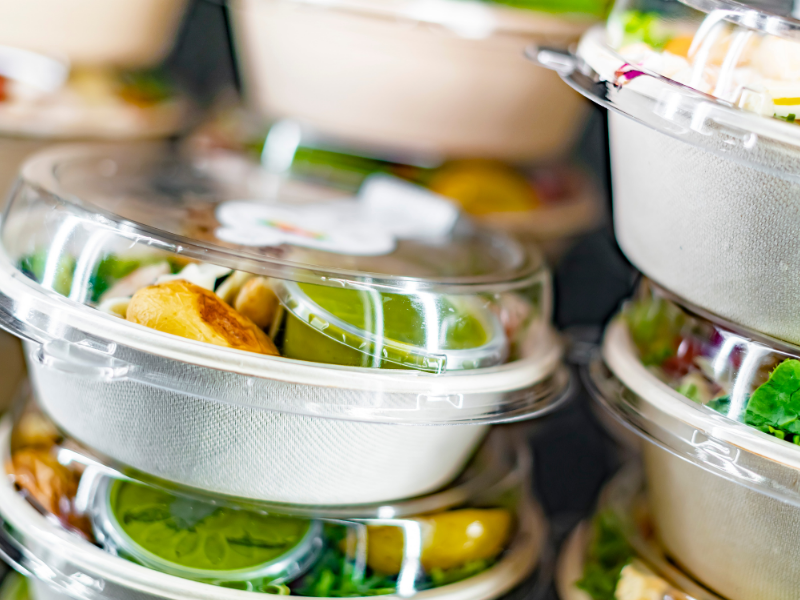
Food for human consumption remains the single largest end-use sector for packaging coatings globally, representing 2.74 million tonnes of demand in 2025 – 39.4% of the global market – valued at $5.89 billion. The beverage sector follows closely, accounting for a further 30.8% of volume demand at $4.55 billion. Savoury snacks and confectionery are identified as the highest growth drivers within the food category.
The pharmaceuticals and healthcare segment, while accounting for just 4.5% of volume in 2025, is forecast to be the fastest growing end-use application to 2031, reflecting the highly technical performance requirements in that sector and the slow but accelerating shift toward more sustainable pharmaceutical packaging solutions.
The mainstream transition by major fast food chains from plastic to paper fibre-based foodservice products is generating significant demand for paper coatings that can meet grease, moisture, and heat resistance requirements without the use of fluorocarbon chemistry. Water-based acrylic barrier coatings are identified as a leading candidate for high-volume cup applications, offering compatibility with repulping systems used in paper recycling.
The Asia-Pacific region remains the dominant force in global packaging coatings consumption, underpinned by a large and growing population, rapid urbanisation, rising disposable incomes, and surging demand for convenient packaged food and beverages. Growth across the forecast period will be fastest, however, in South America and the Middle East & Africa, as packaging infrastructure and consumer markets continue to develop rapidly in those regions.
The Future of Packaging Coatings to 2031 is Smithers’ definitive guide to the global packaging coatings market. Based on extensive primary research – including 60+ in-depth interviews conducted across the value chain – this multi-client report delivers over 100 tables and figures across 340 slides. Market data is presented in tonnage, value, and square metres broken down by packaging type, polymer type, coating technology, coating type, end-use application, and geography.