Since introducing laboratory-based, temperature-specific
rolling resistance (RR) testing capabilities in 2022, the Smithers team has continued to study the effects of cold temperatures on RR performance. Through discussions with EV vehicle OEMs in China as well as around the world, we’ve better understood the various testing challenges they have as it relates to getting the most range out of their tires. Traditional RR test methods are good for benchmarking and labeling testing, but truly understanding the variables on a vehicle that affect RR performance is critical.
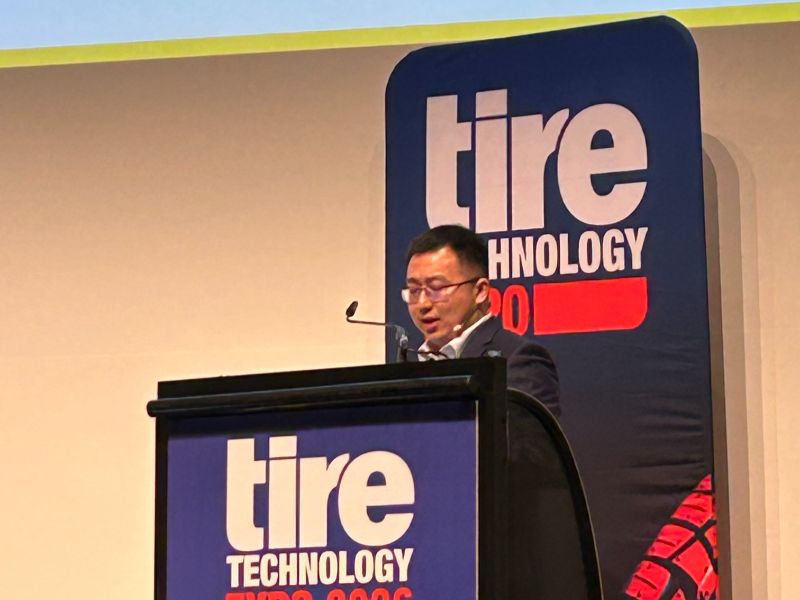
Edward Zhang recently spoke on this topic at Tire Technology Expo in Hannover, Germany. While he covered market dynamics and our latest studies on cold RR performance, he also discussed new RR testing capabilities added to Smithers’ tire and wheel testing laboratory in Suzhou, China. In this Q&A, Edward recaps some of these developments and more.
Why is cold-temperature rolling resistance (RR) so important for EVs specifically?
Tire rolling resistance is a critical factor for EVs because it represents a significantly higher portion of the total driving resistance compared to internal combustion engine (ICE) vehicles. In a typical ICE vehicle, a large amount of energy is lost as heat through the engine and complex transmission systems. Because EVs use highly efficient motors and simplified drivetrains, tire rolling resistance accounts for a larger percentage of the total force required to move the vehicle.
When temperatures drop, EV range is affected by two variables: battery efficiency decreases while tire rolling resistance increases. External research indicates that cold weather can lead to a significant reduction in estimated range, with some studies showing an average drop of about 30% across various popular EV models in freezing conditions. Furthermore, the heavier weight of EV batteries increases the load on tires, which further magnifies the impact of rolling resistance on overall range.
What are some of the limitations of traditional rolling resistance test standards like ISO 28580 and SAE J2452?
While these standards are foundational for industry benchmarking, they provide a limited view of real-world performance:
- Temperature Constraints: Both ISO 28580 and SAE J2452 typically test tires only at room temperature (around 24°C or 25°C). This fails to account for the dramatic performance shifts that occur in colder climates.
- Limited Variables: The single-point method used in ISO 28580 only evaluates a tire under one specific combination of load, speed, and pressure.
- Speed and Temperature: While SAE J2452 uses a coast-down method to look at varying speeds and loads, it still lacks the environmental variability, specifically temperature, that drivers encounter daily.
What were some of your RR testing observations from your initial studies in 2022 and 2023?
After implementing new high- and low-temperature testing capabilities in August 2022, several key trends emerged:
- Increased Sensitivity to Cold: Tires are far more sensitive to temperature changes in the cold than in the heat. For example, the average rolling resistance coefficient (RRc) increased by 30-45% when moving from 25°C down to -10°C, and by 60-75% when dropped to -20°C.
- Performance Inversions: Our studies found that a tire brand that performs well at room temperature might actually perform worse than its competitors in the cold. In one test, a brand with 6% lower RRc at room temperature ended up having 7% higher RRc than its competitor at -20°C.
- Speed and Temperature Interaction: Using the single point method, we observed that the differences in rolling resistance between temperatures were most pronounced at higher speeds.
- Innovation Opportunities: Because tires already have very low rolling resistance at room temperature, focusing on improving cold-weather performance may be a more cost-effective way for manufacturers to improve year-round vehicle range.
What changes are you seeing in the second phase of testing that you conducted on newer tires?
In the past few years, we have conducted testing on a wide range of tires in the market including EV specific tires, summer tires, all-season, and winter tires. Overall, we’ve seen some improvements in cold RR performance. On average, RRc saw a 5-percentage point improvement at both -7 and -20°C while seeing a 10-percentage point improvement at -30°C. This indicates that the tire industry is collectively adjusting tread compounds to perform better at lower temperatures. And, while this trend is certainly positive for EV range, there is still plenty of work that can be done to further advance this science.
What other test capabilities have you added to support additional advancements in RR testing?
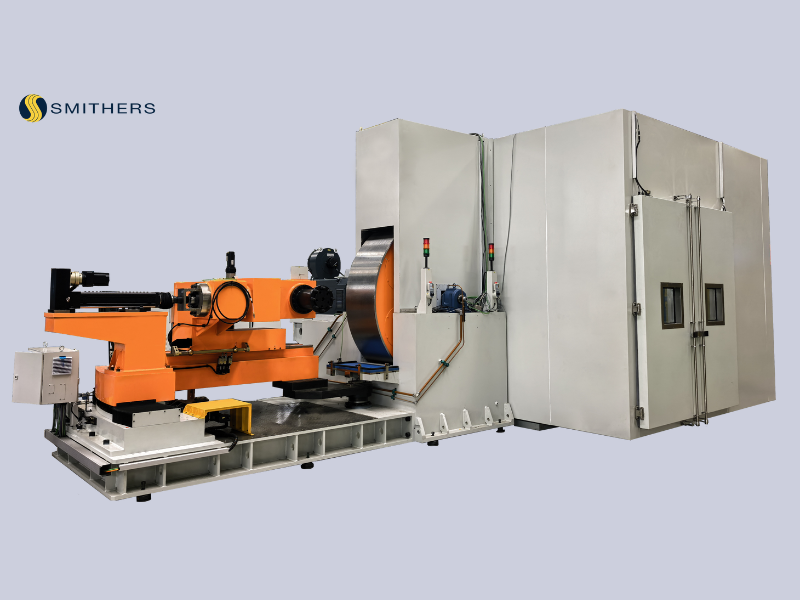
To move beyond basic compliance and into high-fidelity performance mapping, three specialized capabilities were introduced in 2025:
- Slip and Camber Angle Testing: Traditional RR tests are conducted with the tire perfectly vertical (0° camber) and moving straight ahead (0° slip). New protocols now simulate the small angles caused by wheel alignment, steering maneuvers, and vehicle body roll.
- Temperature-Controlled TBR Testing: While temperature-variable testing was initially focused on passenger cars (PCR), these capabilities have expanded to include Truck and Bus Radial (TBR) tires. This allows for the study of how extreme cold affects the efficiency of heavy-duty commercial fleets.
- Chassis Component Integration: A proprietary design now allows for testing tires while they are mounted with actual vehicle chassis components, such as half-shafts and disc brakes. This differentiates the tire-only resistance from the total systemic resistance of the wheel-end assembly.
Why are those important for vehicle manufacturers specifically?
For automotive Original Equipment Manufacturers (OEMs), these capabilities provide data that traditional standards simply cannot:
- Range Modeling: For EV drivers, range anxiety is a primary concern. By measuring the resistance of chassis components alongside the tires, OEMs can identify exactly where energy is being lost, whether it's the rubber compound or a drag issue in the drivetrain, allowing for more accurate dashboard range estimates.
- Alignment Optimization: Understanding how rolling resistance changes at different slip and camber angles helps engineers set factory alignment specifications that balance tire longevity with maximum energy efficiency.
- Fleet Efficiency Targets: For manufacturers of commercial trucks, the addition of TBR cold-temperature testing is vital for meeting increasingly strict greenhouse gas (GHG) and fuel economy regulations, particularly for vehicles operating in northern climates where rolling resistance can spike significantly.
- Scenario-Based Development: These tools allow manufacturers to move away from "one-size-fits-all" tire selections. They can now choose or develop tires based on specific vehicle operating scenarios, such as urban delivery vs. long-haul highway driving, using data that mimics those real-world environments.
To reach Edward or any of our global tire experts to discuss the right options for your next
rolling resistance study, simply click on their contact links.