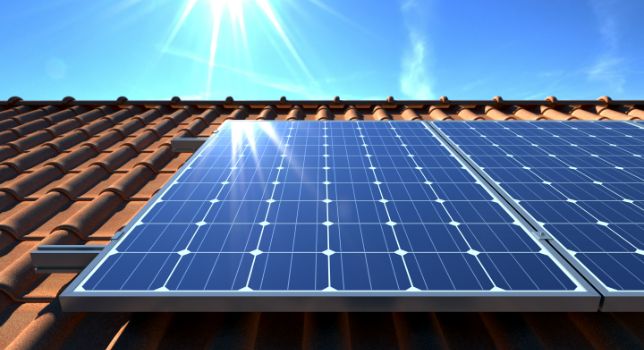
Outdoor products made from rubber and plastics, from roofing shingles to automotive seals, must prove they can survive years of sunlight, heat, and moisture before they reach the market. For decades, two US climates have served as the global benchmarks for that proof: South Florida and the Arizona desert. Waiting years for real-world results is rarely practical, which is why most manufacturers rely on accelerated laboratory weathering tests that reproduce these benchmark climates in a matter of weeks or months.
This Q&A with our Physical Testing Supervisor, Jeff Marek, explains why the Florida and Arizona climates matter, which industry standards are most commonly used for evaluations, how the tests are conducted, and how Smithers supports manufacturers through accelerated weathering and post-exposure evaluation.
Why are Florida and Arizona benchmark climates for weathering testing?
Florida and Arizona represent the two of the most aggressive and complementary weathering environments, which is why most international durability specifications and accelerated test cycles are designed around them.
South Florida (subtropical benchmark): The region around Miami combines intense year-round ultraviolet (UV) radiation with high heat, humidity above 70 percent for much of the year, and heavy rainfall. This combination accelerates photo-oxidation, hydrolysis, color fade, gloss loss, chalking, and microbial attack. If a polymer survives Florida-type conditions, it is generally expected to withstand most temperate and subtropical service environments worldwide.
Central Arizona (desert benchmark): The area around Phoenix delivers some of the highest annual total solar radiation on Earth, extreme surface temperatures (dark materials can exceed 90 °C / 194 °F), large day-night thermal cycling, and very low humidity. Arizona-type conditions are the standard for evaluating heat-driven degradation, thermal cracking, embrittlement, and UV damage in the absence of moisture.
Together, the two climates bracket the "wet-hot" and "dry-hot" extremes a product may face in service. Laboratory weathering chambers and instruments are programmed with exposure cycles engineered to correlate with one or both.
How is Florida or Arizona weathering simulated in the laboratory?
Accelerated laboratory weathering uses instrumented test chambers to reproduce the critical stress factors of each benchmark climate: solar radiation, heat, moisture, and humidity. The main methods are:
- Xenon arc weathering (ASTM G155, ISO 4892-2, ASTM D2565 for plastics, ASTM D4798 for roofing bitumen, SAE J2527 for automotive exteriors, SAE J2412 for automotive interiors): Filtered xenon lamps closely reproduce the full solar spectrum, making xenon arc the reference method for simulating natural sunlight. Programmable cycles control irradiance (commonly 0.35 to 0.55 W/m² at 340 nm), black panel temperature, chamber temperature, relative humidity, and water spray. Florida-type cycles emphasize light plus water spray and high humidity, while Arizona-type cycles emphasize higher irradiance and temperature with dry conditions.
- Fluorescent UV / condensation testing (ASTM G154, ISO 4892-3, ASTM D4587): UVA-340 lamps reproduce the short-wavelength UV that drives most polymer degradation, alternating with condensation cycles that simulate dew and rain. This is a cost-effective screening method for Florida-type moisture and UV attack.
- Heat aging (ASTM D573 and ASTM D865 for rubber, ASTM D3045 for plastics): Circulating-air ovens simulate the sustained elevated temperatures of desert service and support service life estimation through aging at multiple temperatures.
- Thermal and humidity aging and cycling: Environmental chambers reproduce the high-humidity heat of Florida service and the large day-night temperature swings of the desert, revealing problems such as hydrolysis, warpage, delamination, and cracking at material interfaces.
- Ozone resistance testing (ASTM D1149, ISO 1431-1): Ozone chambers expose strained rubber specimens to controlled ozone concentrations, since ground-level ozone is a potential cause of surface cracking in elastomers serving in hot outdoor environments.
- Salt Spray Testing (ASTM B117): Samples can be exposed to a salt fog in a controlled chamber under specific conditions. While ASTM B117 is a general standard, other relevant standards can be used to combine salt exposure with thermal and UV exposures to understand the true effects of environments like South Florida.
After exposure, specimens are evaluated against unexposed controls for color change (ASTM D2244, delta E), gloss retention (ASTM D523), chalking (ASTM D4214), yellowness index (ASTM E313), surface cracking and crazing, and retention of mechanical properties such as tensile strength and elongation (ASTM D412 for rubber, ASTM D638 for plastics).
How do laboratory tests relate to real Florida and Arizona exposure?
Many long-standing product specifications were originally written around natural exposure at benchmark sites (under practices such as ASTM G7 and ASTM D1435), and some still reference it. In practice, however, most qualification and development programs today are run in the laboratory, for three key reasons:
- Duration: A xenon arc program of 2,000 hours takes roughly three months of continuous operation, versus one to five years outdoors.
- Control and repeatability: Chamber conditions are held constant regardless of season or weather, so results are comparable between test runs, materials, and laboratories.
- Correlation: Standard cycles in ASTM G155, ISO 4892-2, and SAE J2527 were developed specifically to rank materials consistently with Florida and Arizona service experience.
Exposure durations are defined either in hours or as a total radiant dose in kJ/m² or MJ/m² at a reference wavelength, which allows laboratory exposures to be scaled against the annual UV dose of the target climate.
Which rubber and plastic products must meet Florida and Arizona weathering requirements?
Any polymer product with an outdoor service life is a candidate, but Florida- and Arizona-type durability requirements appear explicitly in the specifications for:
- Roofing shingles and underlayments: Asphalt shingle standards such as ASTM D3462 and Florida product-approval programs (Florida Building Code and Miami-Dade County approvals, including TAS test protocols) require demonstrated weathering durability.
- Single-ply roofing membranes: EPDM (ASTM D4637), TPO (ASTM D6878), and PVC (ASTM D4434) membranes carry minimum xenon arc exposure requirements with post-exposure crack and property checks.
- Vinyl siding, soffit, and window profiles: ASTM D3679 (siding) and ASTM D4726 (rigid PVC profiles) impose weathering durability and color-change limits benchmarked against hot, high-UV climates.
- Automotive exterior and interior components: Seals, weatherstrips, trim, and instrument panels are tested to SAE J2527 (exterior xenon) and SAE J2412 (interior xenon) and to OEM specifications benchmarked against Florida and Arizona performance.
- Other outdoor products: Wire and cable jacketing, hoses, geomembranes, agricultural films, decking, outdoor furniture, playground components, and solar module encapsulants and back sheets are all commonly qualified using ASTM G155 or G154 chamber cycles.
For elastomers in these applications, ozone cracking is a parallel concern: the combination of heat, humidity, and ground-level ozone found in Florida-type service is especially aggressive toward strained rubber such as weather seals and hoses.
How long does accelerated weathering testing take?
Typical laboratory programs run 500 to 4,000 hours of chamber exposure depending on the specific standard and the product's expected service life. As a rule of thumb, 2,000 hours of continuous xenon arc exposure takes about three months. Ozone, heat aging, and humidity aging programs commonly run from 72 hours to several weeks. Because chambers operate around the clock and conditions are fully controlled, laboratory testing delivers durability data on a development timeline rather than a multi-year outdoor one.
How can Smithers support Florida- and Arizona-related weathering programs?
Smithers operates global, ISO 17025-accredited rubber and plastics testing laboratories equipped with a wide range of weathering, aging, and environmental test chambers. In addition, our physical testing capabilities can properly evaluate pre- and post-weathering performance to meet standards or benchmark against a control or other products. For products that must withstand Florida- or Arizona-type service conditions, our team can:
- Perform xenon arc weathering and UV/weathering testing to ASTM, ISO, and SAE cycles that simulate subtropical and desert climates.
- Conduct ozone resistance testing (ISO 1431-1, ASTM D1149), heat aging, and thermal and humidity aging to capture the full environmental picture.
- Carry out post-exposure evaluation of mechanical and physical properties, including tensile, elongation, hardness, color, and surface condition, against unexposed controls.
- Apply polymer life prediction and accelerated aging techniques to translate chamber exposure data into service-life estimates.
- Develop custom test programs tailored to your material, product design, and end-use environment, and advise on material selection or reformulation when a product falls short.
Whether you are qualifying a new roofing membrane to a building code, validating an automotive seal against an OEM specification, or screening candidate formulations for an outdoor consumer product, accelerated weathering data can provide the data needed to make your best development decisions.
Ready to start your next weathering program?
Contact our team to discuss your material, application, and target standards.